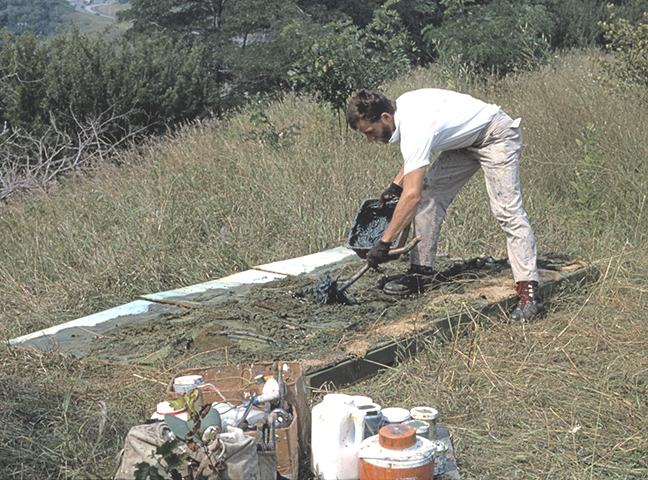
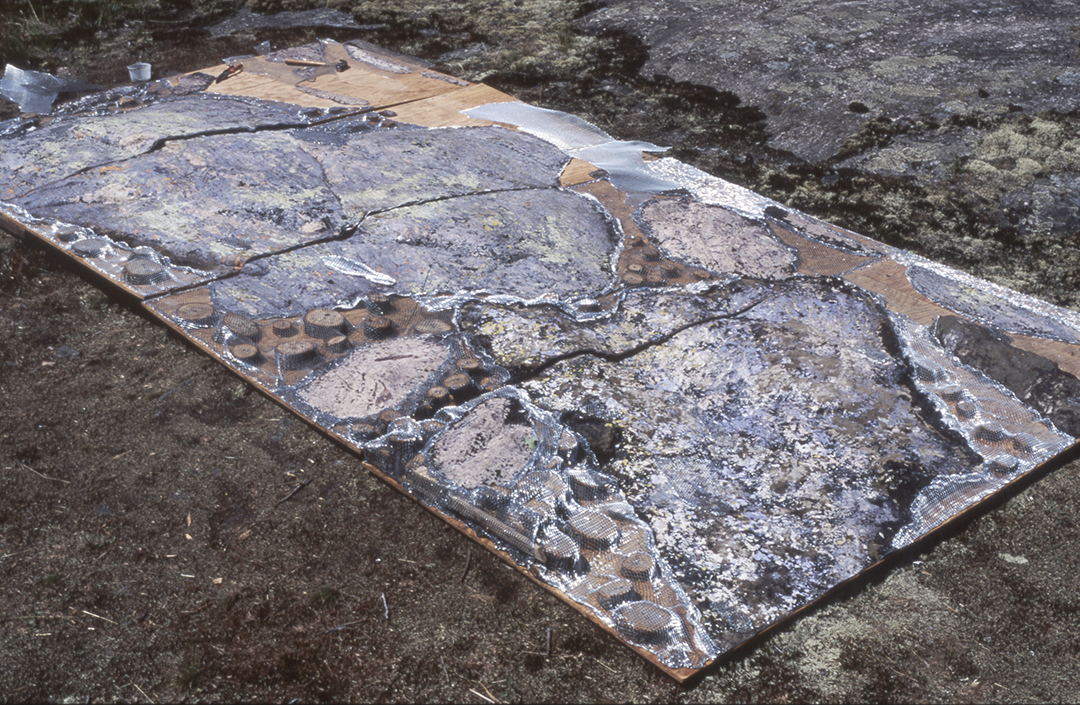
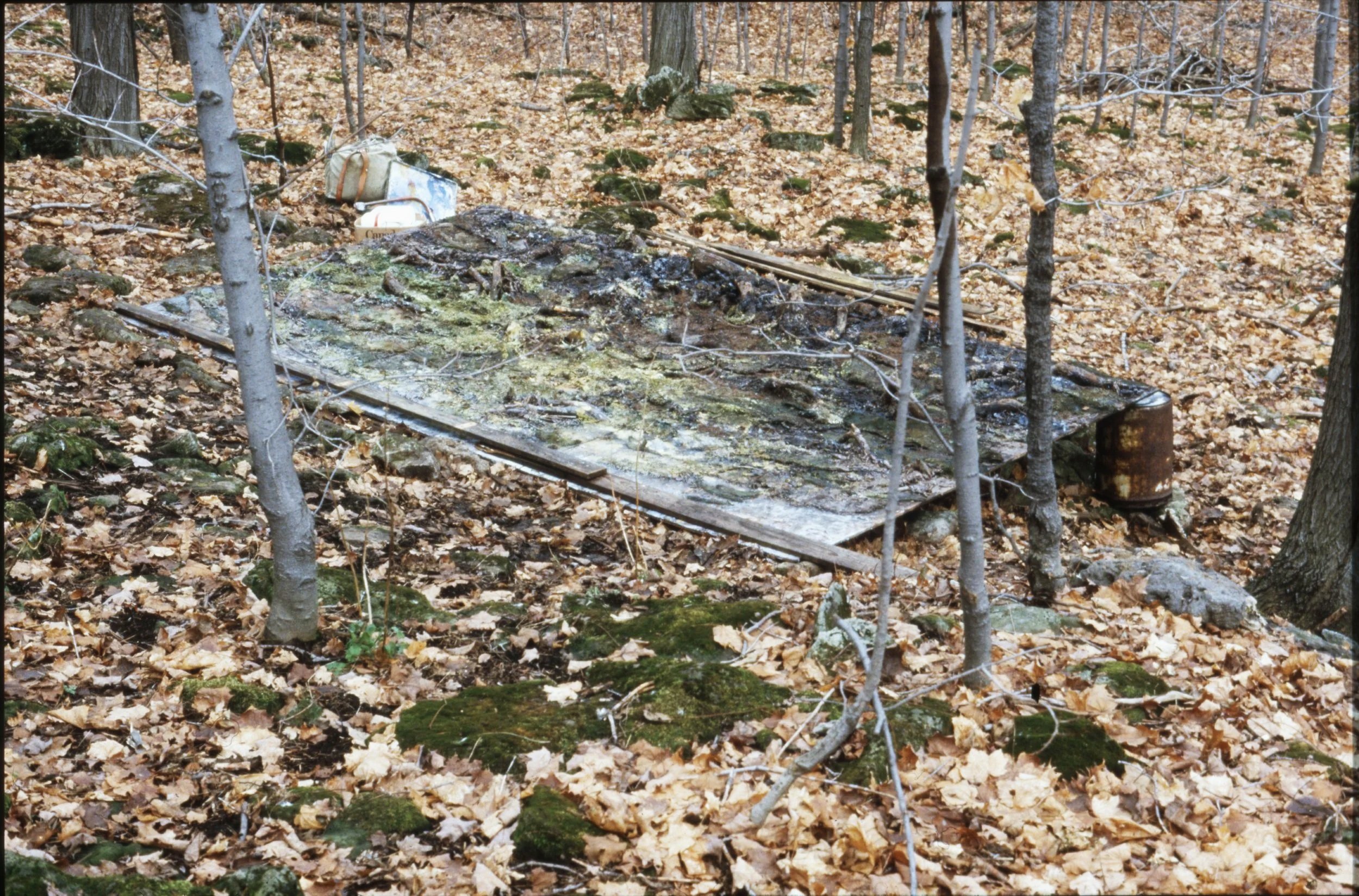
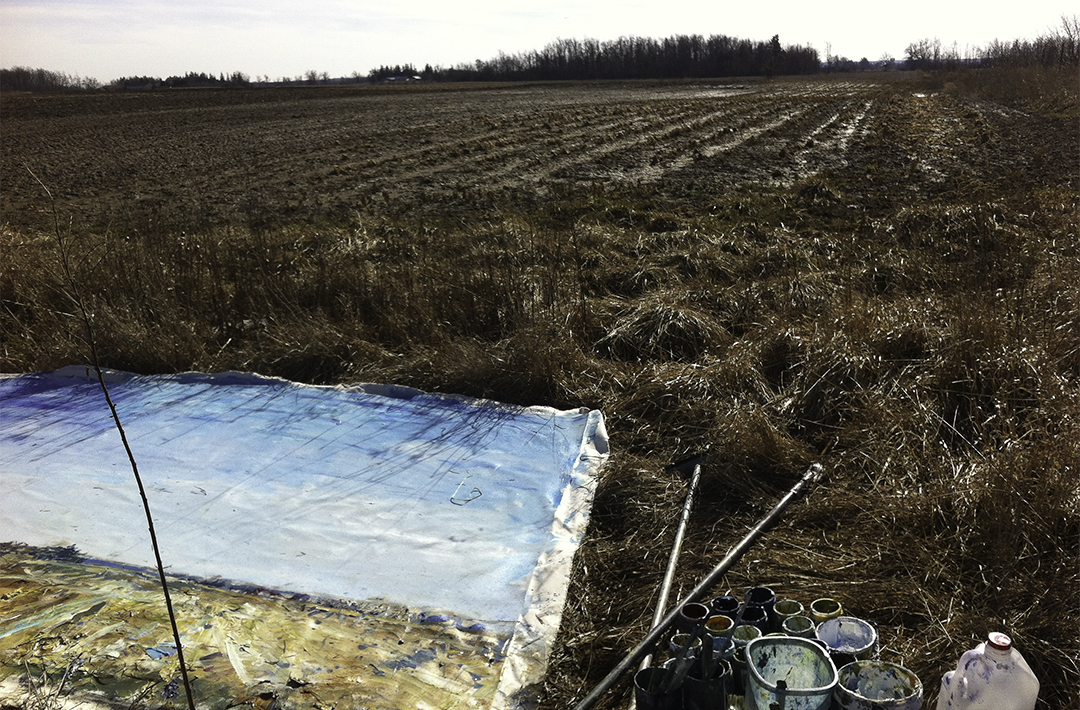
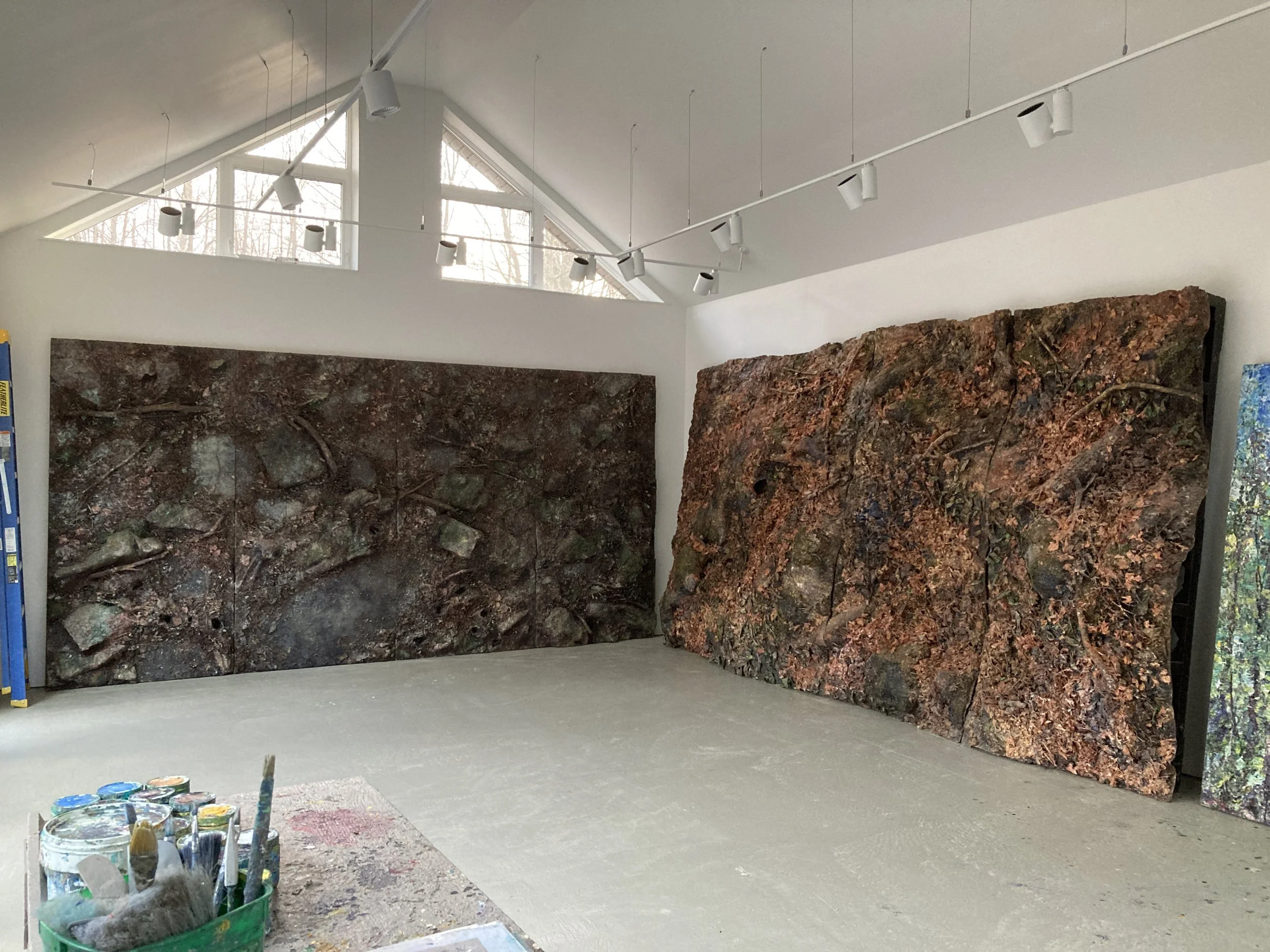
I am a landscape painter working en plein air making large-scale acrylics and smaller studies. As I work on site, I allow Nature to take its course, to show the accumulation, traces and scars, the evidence of erosion, growth and decay. I build up and work into the surface, while fragments of the site become embedded in it. Wind, temperature and precipitation intervene as active forces. In this way weather, site memory and materials collaborate in the painting process. By making space for unplanned events and loosening my control over the outcome, I allow a sense of wonder to emerge.
For centuries Western culture has sought to demystify and control nature, and today no corner of the earth is unaltered by technology. Yet Nature remains an unfathomable mystery, infinitely complex and enigmatic. My work inhabits a continuum from Alan Sonfist’s Time Landscape (initiated in 1975) to the present-day groundswell of artists addressing climate change and questioning Western anthropocentrism. We need to perceive ourselves as connected to everything, but not the centre of everything.
Site: Don Valley, Toronto Ontario, 1986
The Canadian Shield: This iconic landscape is the location of some of the Earth's oldest bedrock. Traces of glaciation and other geologic events are everywhere. Thousands of years of human presence is also interwoven with the topography. In the Terraforms series, casts taken directly from the site were combined with manufactured materials, natural fragments and acrylic paint. The paintings transmit a resonance from these ancient sites.
Site: Muskoka Ontario, 1991
The Niagara Escarpment was once an ancient seabed. It is now a 725 kilometre-long forested ridge of limestone traversing Southern Ontario. It has been shaped by both geological and human forces. Despite having been designated a UNESCO Biosphere Reserve, the Escarpment is often at the centre of land-use battles.
Site: Caledon Ontario, 1983
The Peel Plain: Northwest of Toronto are the Greenbelt farmlands of the Peel Plain, but the region is being transformed by urban expansion. These are sublime open spaces with an uncertain future. Through the paintings I reflect on memory and loss in a changing landscape.
Site: Caledon Ontario, 2016
My studio is in a forest on the Niagara Escarpment. It is within the bounds of the Ajetance Treaty 19 and the Mississaugas of the Credit First Nation.